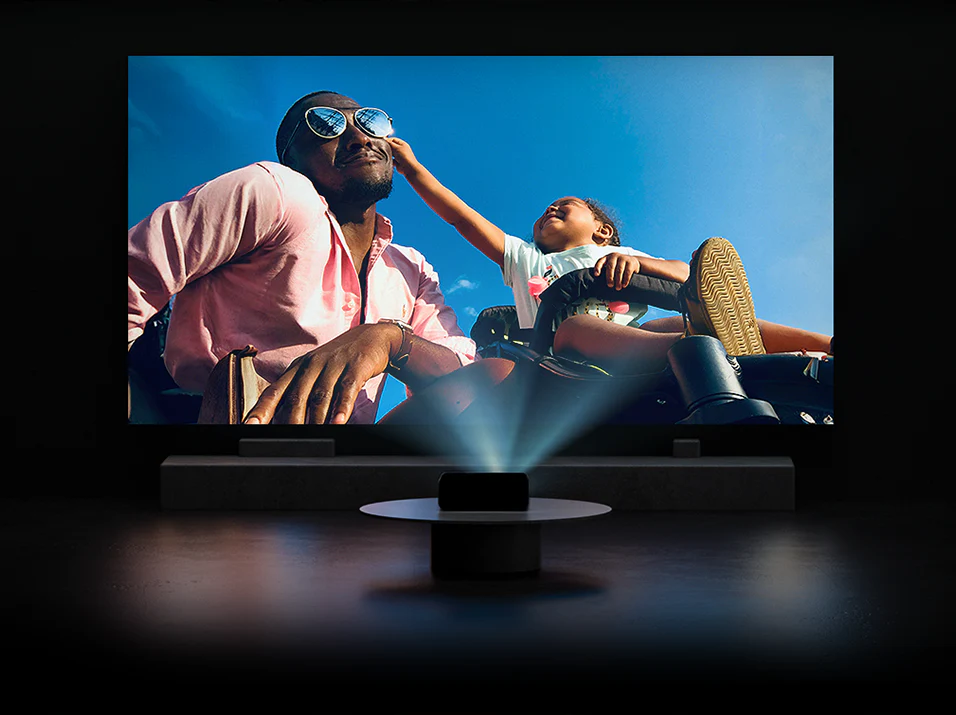
This question comes up every time someone shops for a projector in the US. 4K sounds tempting. Full HD sounds practical. The truth sits in how you watch, where you watch, and what you expect on screen. I’ll break this down in plain terms, without hype, so you can choose with confidence and avoid buyer’s regret.
The short answer upfront
A 4K projector is better for large screens, bright rooms, and long-term use, while a Full HD projector works well for smaller spaces and controlled lighting. The difference becomes clear as screen size grows and viewing distance shrinks. Resolution alone isn’t everything, but it does set the ceiling for image detail.
What Full HD really means in daily use
Full HD means 1920 x 1080 pixels.
That’s enough detail for movies, shows, sports, and casual gaming. On screens up to around 100 to 120 inches, Full HD can look sharp, especially if you sit a little farther back.
For bedrooms, apartments, and home offices, Full HD often feels balanced. It loads faster, needs less processing, and doesn’t punish weaker Wi-Fi connections.
Where Full HD starts to struggle
Problems show up when the screen grows.
As image size increases, pixels stretch. Text softens. Fine details blur. Once you pass certain screen sizes, the image loses that crisp edge.
That’s when people say, “Something feels off,” even if they can’t explain why.
What 4K changes immediately
4K means 3840 x 2160 pixels.
That’s four times the detail of Full HD. The difference shows most on large screens. Text stays sharp. Faces hold detail. Game environments feel deeper.
You don’t need to press your nose against the screen to notice it. At normal seating distance, 4K still looks cleaner and more natural.
Screen size decides everything
This is the real decision point.
If your screen is under 100 inches, Full HD holds up well. Between 100 and 150 inches, the gap starts to show. Above that, 4K pulls ahead fast.
Boss S7 and S8A support very large screen sizes without falling apart visually. That matters for home cinema fans who want a theatre feel.
Brightness works with resolution, not against it
Resolution alone doesn’t save a dim image.
Higher resolution helps preserve detail, but brightness keeps that detail visible. A bright 4K projector keeps sharpness even in rooms with ambient light.
Boss S7 pairs high brightness with 4K resolution, which is why it performs well in real living rooms, not just dark basements.
Gaming tells the truth fast
Gaming exposes weaknesses instantly.
In fast scenes, lower resolution softens edges. HUD text can blur. Distant objects lose clarity.
Full HD works fine for casual gaming. Competitive or cinematic gaming benefits from 4K, especially on large screens.
Lower input lag matters too, but resolution affects how clearly you read the action.
Streaming quality and internet reality
Most streaming platforms offer both Full HD and 4K.
If your internet struggles, Full HD streams more smoothly. 4K demands stable bandwidth.
Boss projectors handle both well, but your connection still matters. That’s something buyers often overlook.
Boss S7 4K Projector explains why 4K wins long term
The Boss S7 shows what 4K is meant to look like. High brightness, true 4K resolution, and strong processing keep images sharp across large screens. Built-in Android OS means fewer external devices and fewer signal issues.
This model fits buyers who want a projector that still feels current years from now.
Boss S8A 4K Projector balances quality and flexibility
The Boss S8A offers 4K clarity with added convenience. Auto focus and auto keystone reduce setup errors, which helps keep the image clean. Google TV support allows direct streaming without extra gear.
This model works well for users who move between rooms or outdoor setups.
Boss S5A Smart Projector still makes sense
The Boss S5A proves Full HD still has a place. It delivers clear 1080p visuals, solid brightness, and smart features for everyday viewing. In smaller rooms, the image looks clean and comfortable.
It’s a practical choice when space and budget matter more than extreme screen size.
Longevity matters more than specs
Projectors aren’t phones. People keep them for years.
4K content is growing. Screens are getting bigger. Sitting closer is common. Choosing 4K now avoids replacing sooner.
Boss S7 and S8A use long-life LED lamps, rated for up to 60,000 hours. That supports long-term ownership without constant upgrades.
Frequently Asked Questions
Is 4K always better than Full HD?
No. For small rooms and moderate screen sizes, Full HD still looks good. The advantage of 4K grows with screen size.
Can I watch Full HD content on a 4K projector?
Yes. 4K projectors display Full HD content cleanly and often improve perceived sharpness.
Does 4K increase input lag?
Not by default. Input lag depends on processing, not resolution alone.
Is Full HD becoming outdated?
No. It’s still widely used. But 4K offers more headroom for future content and larger screens.
Which Boss projector should I choose if I’m unsure?
If you want flexibility and long-term value, Boss S7 is the safest choice.
Conclusion
Full HD and 4K both work. The difference shows when screens get big, rooms get bright, and expectations rise.
If you want a practical setup for smaller spaces, Boss S5A handles the job well. If you want sharper detail, larger screens, and future-ready viewing, Boss S7 stands at the top, with S8A offering added portability.
Choose based on how you watch, not just what sounds better.